How To Start Investing For Beginners
A Clear Step-By-Step Roadmap
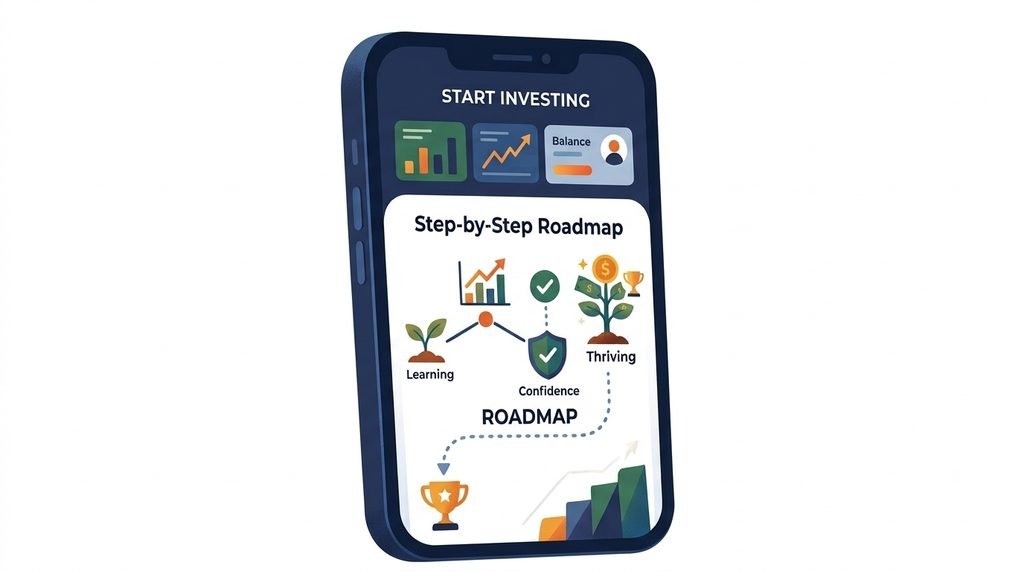
If you’ve never invested before, figuring out where to start can feel harder than it should.
You might be wondering:
- How much money do I actually need?
- What should I invest in?
- Which account should I open first?
- What if I make a mistake?
Here’s the good news: You don’t need to become a financial expert before you begin.
You also don’t need thousands of dollars or the ability to predict the market.
You just need a simple path and a few clear next steps.
That’s exactly what this page is for. If you’ve been wondering how to start investing for beginners, we’ve got you covered!
This is your beginner roadmap. We’ll walk through the basics in order — what investing is, how to prepare, how to choose an account, what you can invest in, and how to build a simple long-term approach.
No jargon. No hype. No pressure.
Just clear next steps.
Important: Investorlyte provides educational information only, not personalized financial advice. Investing involves risk, including the possible loss of money. Make sure you understand an investment and consider your own situation before making any decisions.
Your Investing Roadmap
You don’t have to learn everything at once.
Follow these steps in order. Each one builds on the last.
Step 1 — Understand What Investing Actually Is
Before you open an account, get clear on the basics.
You’ll learn:
- What investing really means
- How it differs from saving
- Why people invest
- Why investments go up and down
- What you actually need to get started
Step 2 — Make Sure You’re Financially Ready
Investing matters, but it shouldn’t come before your basic financial foundation.
You’ll learn how to think about:
- Emergency savings
- High-interest debt
- Money you may need soon
- Your time horizon
- The real risks involved
Step 3 — Decide How Much You Can Start With
You don’t need a large sum to begin.
We’ll cover:
- Whether there’s a true minimum
- How fractional shares make starting easier
- What investing $25, $50, or $100 can look like
- Why consistency often matters more than a big first deposit
- How dollar-cost averaging works
Step 4 — Choose Your First Investment Account
You need a place to hold your investments.
You’ll learn:
- What a brokerage account is
- The difference between taxable and retirement accounts
- What to look for in a beginner-friendly platform
- How the account-opening process usually works
Step 5 — Understand What You Can Invest In
Stocks, ETFs, and index funds can sound confusing at first. They don’t have to be.
We’ll break down:
- What a stock is
- What an ETF is
- What an index fund is
- Why diversification matters
- Which options are most beginner-friendly
Step 6 — Build a Simple First Portfolio
Once you understand the pieces, it’s time to put them together.
You’ll learn:
- What a portfolio actually is
- Why simple is often better
- How diversification works in practice
- Why you don’t need dozens of investments
Step 7 — Make Your First Investment
Now we put it all together.
You’ll walk through:
- Opening an account
- Funding it
- Choosing an investment you understand
- Placing your first order
- Setting up a simple ongoing plan
Step 8 — Keep Going Without Overcomplicating It
Starting is only the beginning. The real goal is building a sustainable habit.
You’ll learn why it helps to:
- Invest consistently
- Think long-term
- Avoid trying to time the market
- Ignore short-term noise
- Review your plan without constantly changing it
Your Real Goal
By the end of this roadmap, you don’t need to know everything.
You just want to reach the point where you can say:
“I understand the basics, I know what my next step is, and I can take it with confidence.”
That’s enough to get started.